

Locum tenens work has become an increasingly mainstream choice for physicians. Locums has reached a tipping point, with more physicians learning about locums from colleagues in their own practice settings. Regardless of age or gender, physicians are turning to locums as a deliberate way to control their careers and build a more satisfying life.
Burnout and stressors have long plagued the profession, but physicians are now experiencing decreasing professional autonomy, declining reimbursements, and an ever-growing administrative burden. Physicians face distinct concerns at each stage of their career, from starting a practice with enormous debt to building work-life balance mid-career to winding down their practice at retirement. The strength of locums lies in its ability to meet physicians where they are, providing the right answer at just the right time.
1. The rise of locum tenens: A peer-validated career choice
The past few years have seen a sea change in locum tenens trends, as more physicians than ever before have locums experience under their belt. This increased industry-wide exposure to locums has led to growing legitimacy for the profession and increasing interest in locums among physicians who see value in the career option.
Growth driven by word of mouth
In 2016, only 20% of physicians had ever worked locums.1 By 2025, that number had nearly doubled to 41%.2 One result of this shift is that physicians are now learning about locums organically from each other via word-of-mouth recommendations rather than through agency outreach.
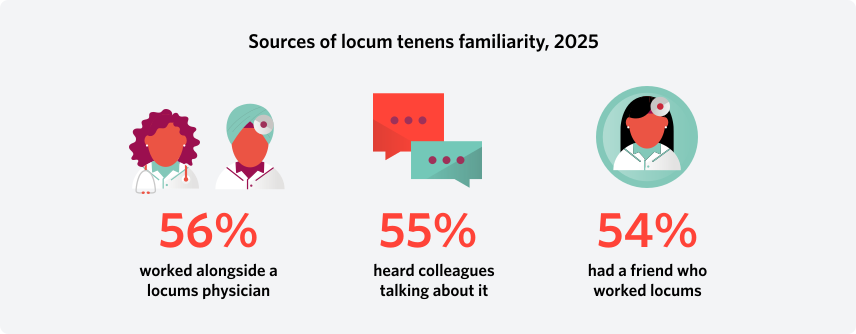
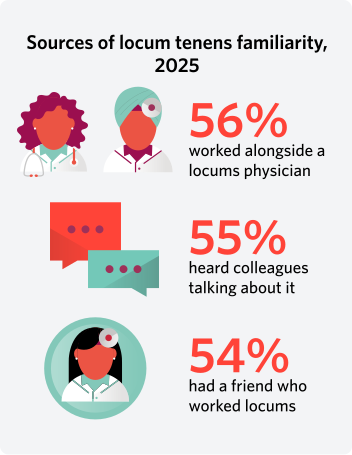
A majority of physicians (58%) in 2019 said they were first introduced to locums by staffing agencies.3 Just five years later, that number declined to 33%, as reported in the 2024 Locum Tenens Awareness and Perceptions Survey.4 Instead, physicians are learning about locums from their peers. According to the survey, 56% learned about locums from working alongside locum physicians, 55% from colleagues, and 54% from having a friend who worked locums.4
Learning about locums from trusted colleagues, rather than through agency marketing, has transformed locums into a respected, peer-validated career choice. When physicians know someone who has worked locums, it takes away the fear of the unknown and makes it easier to imagine giving locums a try. And a solid recommendation provides reassurance that the benefits of working locums are real.

My personal exposure was really minimal. I had never done it before, but I did have some colleagues from training who had maybe picked up six months or a year doing locums as either a full-time or as a part-time responsibility during a period of professional transition.
—Dr. Benjamin Feldman
Continuing growth in locums interest
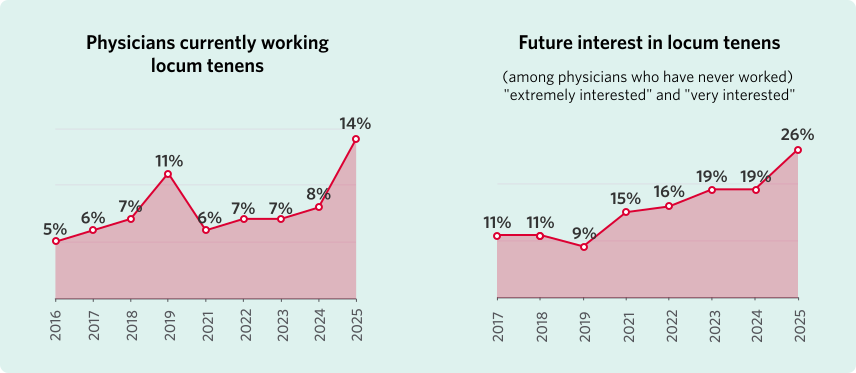
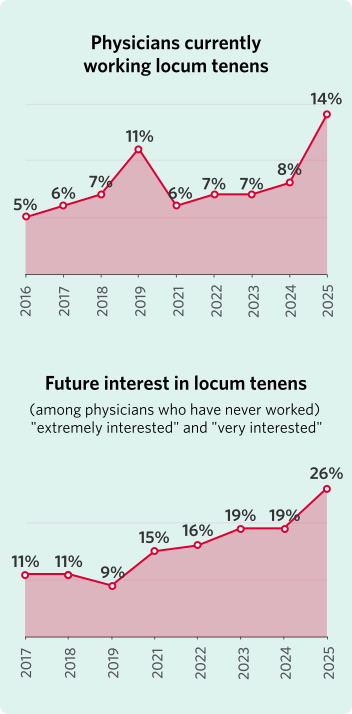
Locum tenens experience and interest in the career path continue to grow. Ten years ago, only 5% of the general physician population said they were currently working locum tenens. By 2025, that number had spiked to 14%.2
The survey also found that, among clinicians who have ever worked locums, 35% have worked an assignment within the past year.2 This means that more than a third of the entire locums-experienced workforce has recent locum activity.
Growing interest in locums suggests that locum participation will continue to increase. The 2025 survey found that 26% of physicians are “very or extremely interested” in locums work, up seven percentage points year over year and up 15 points from the 2017 survey.2
With so many physicians gaining locums experience and interest continuing to grow, the population of locum physicians increasingly reflects the general physician population in terms of gender, career stage, and family composition—demonstrating that locums is a respected, mainstream career choice.
2. Who works locums: A population that mirrors the profession
Outdated stereotypes about the locum tenens physician population are debunked by demographic data illustrating that locum physicians and the larger physician population largely share the same silhouette. Some slight demographic skews in gender and career stage are likely holdovers from historical patterns in specialty composition. The overall picture illustrates clearly that locum physicians are not outliers, but fit securely within the wider physician profile.
Gender
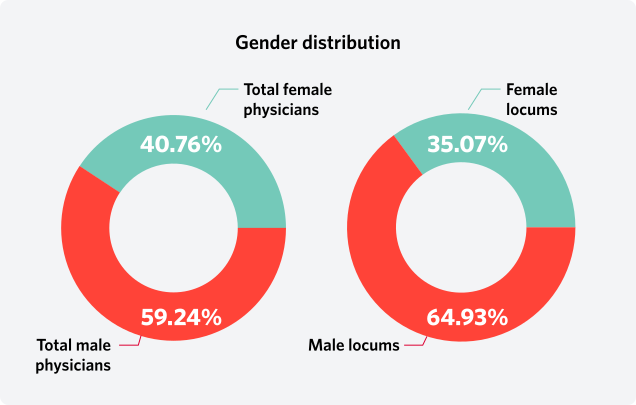
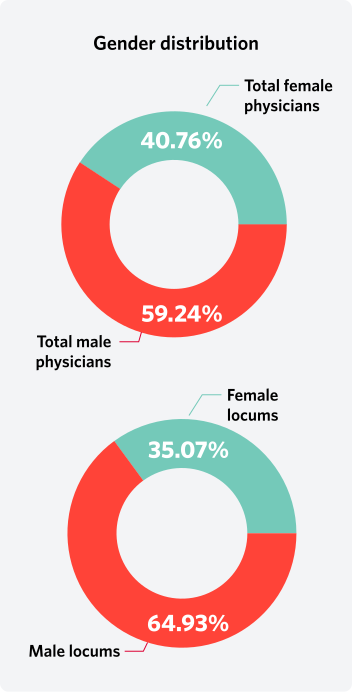
Gender disparity within physician specialties, particularly among those in a later career stage, bleeds over into a slight gender skew towards greater male participation in locums—male physicians comprise 65% of the locums workforce, compared to 59% in the general physician population.5
Conversely, 35% of the locums workforce is female, compared with 41% in the general physician population.5 Locums provides several career benefits, from greater flexibility to stronger earning potential, and the data suggest that gender is not a significant barrier to women who are interested in exploring this career path.
Family status
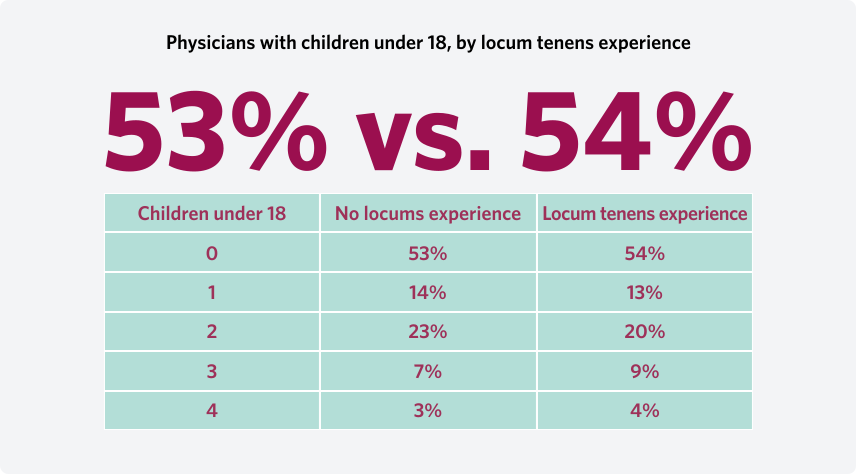
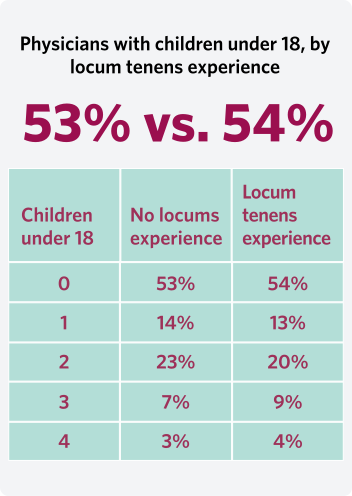
Research finds that physicians with and without children participate in locum tenens at nearly identical rates to non-locum physicians, upending the assumption that working locums is incompatible with raising a family.2
Approximately half of physicians with locum tenens experience (54%) do not have children, which is similar to the 53% of physicians who do not have locums experience or children. Likewise, physicians who do have children are represented in the locums population at nearly identical rates to the general physician population.2
Age distribution
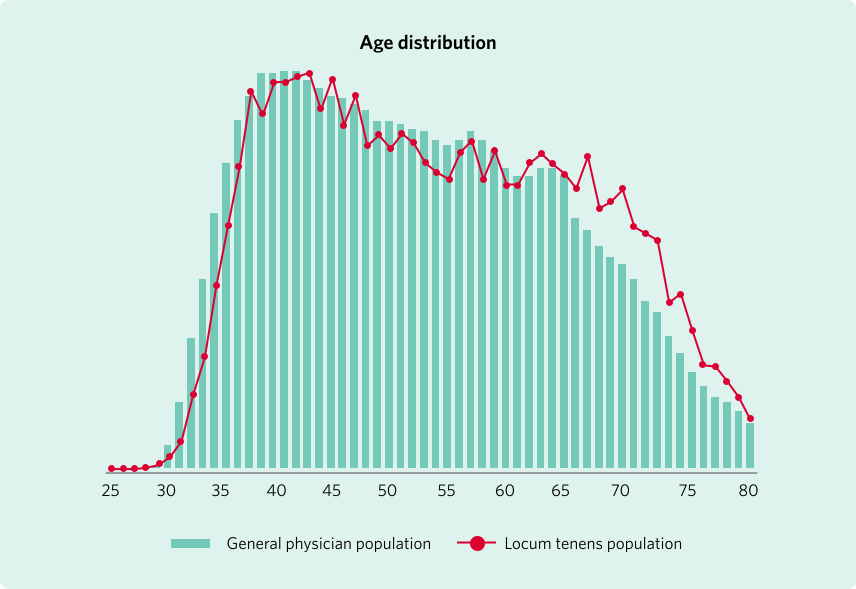
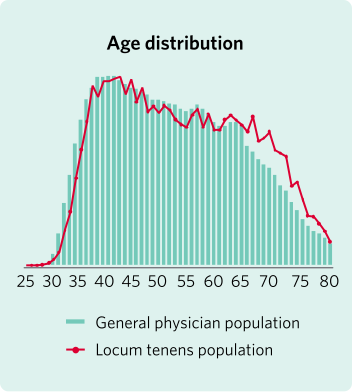
Physicians of all age ranges are embracing locums work, from early career through retirement. For younger and mid-career physicians, the rates of locums participation closely follow the general physician population. For example, early-career physicians represent 15.62% of locums practitioners, compared with 18.76% of the general physician population.5
In later years, locum physicians somewhat outpace the non-locum cohort, especially for those aged 60 and older. This tracks with the idea that locums helps physicians transition into retirement and allows them to keep working well into their golden years. Even so, this tilt toward locums among late-career physicians (22.58% locums vs. 17.42% non-locums) is smaller than stereotypes about locums would suggest.5
As mentioned, the slight preponderance of later-career physicians in locums may account for the greater male representation in the profession. The gender disparities within certain specialties were even more pronounced when late-career physicians first began practicing. This suggests that factors like age, gender, and specialty are deeply interconnected when it comes to locums participation.
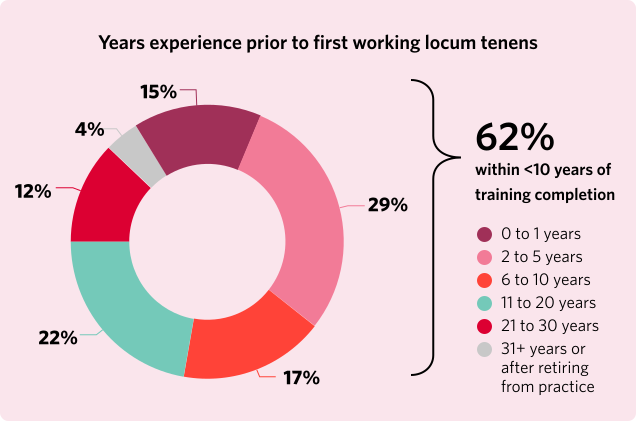
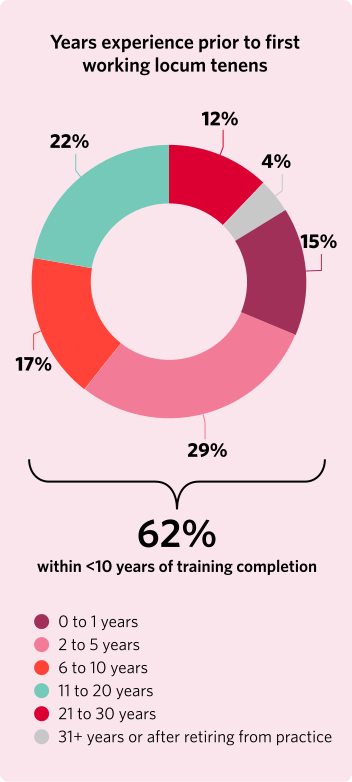
Although late-career physicians participate in locums at an elevated rate, most locums physicians first dip their toes into locums earlier in their careers. A full 62% of locum physicians begin working locums within their first 10 years of practice.6 This early adoption of locums reveals a physician population eager to supplement their income or focus on patient care while avoiding the administrative burdens of a permanent role.
Another 22% start working locums in the second decade of their career, according to the survey.6 This timeframe could coincide with increasing family obligations or a mid-career burnout that has them seeking alternative physician careers that allow greater autonomy and a reduced administrative workload.
Only 12% first begin working locums 21 – 30 years into their career, while 4% begin 31 years or later.6 Utilizing locums as a retirement tool allows physicians to taper their hours while focusing on patient care, and may allow them to begin traveling and having adventures as part of a working retirement.
Why physicians turn to locum tenens
Physicians are under constant pressure to do more with less time and fewer resources. In addition to ever-growing administrative responsibilities, physicians face economic pressures in the form of student loan burdens, reduced reimbursement rates, and general cost-of-living increases. This is why physicians are more likely to turn to locums as a financial supplement to their regular role, not as a career replacement.
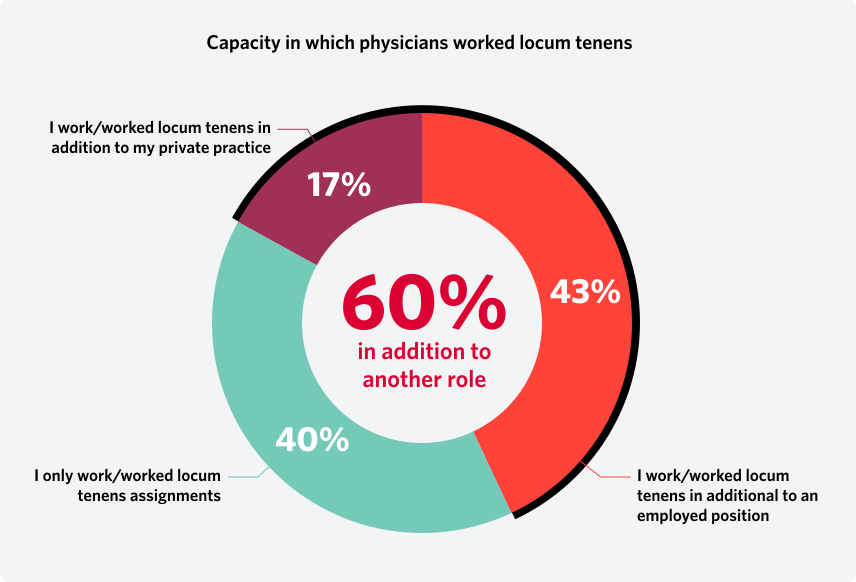
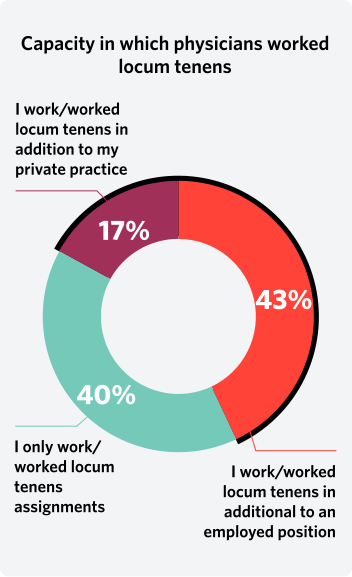
A full 60% work locums in addition to other roles. Only 40% utilize locums as their primary career model, with locums as their only professional role.6
Income and compensation are among the top reasons for exploring locums, along with greater physician autonomy.4
47% cited supplementing their core income as their primary motivation
30% cited the appealing compensation
29% cited the ability to control their own schedule
How and why physicians act on these similar motivations varies meaningfully by career stage. The sections that follow explore how early‑, mid‑, and late‑career physicians interpret these same motivations differently—and how external pressures like debt, reimbursement, well-being, and workforce shortages shape their decisions over time.
3. Early career: High interest, low familiarity, and mounting financial pressure
Feeling the weight of educational debt, early-career physicians are eager to begin their careers and find financial stability. The financial benefits of locum tenens appeal to these physicians, but they don’t know enough about locums to feel confident in exploring that career path, and they’re further held back by future-focused concerns about career and household stability. Despite this awareness gap, recent federal policy changes will only increase their financial burden and may lead many more early-career physicians to give locums a deeper look.
Awareness vs. interest
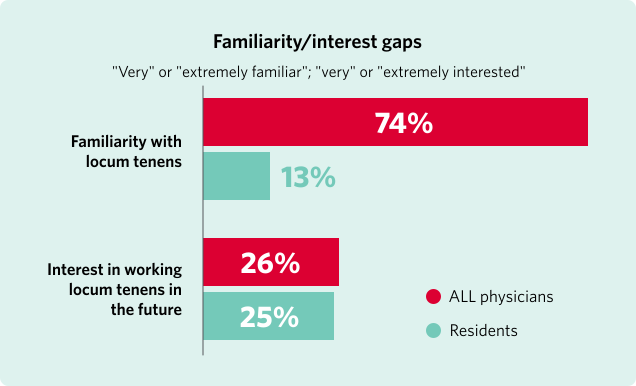
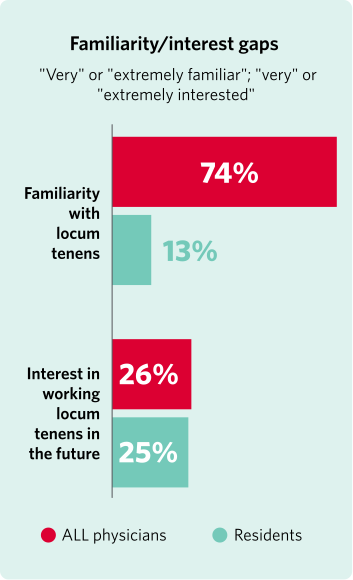
Early-career physicians just don’t know enough about locums to make informed decisions in the crucial time frame when they are launching their careers. Only 13% of residents describe themselves as “extremely or very familiar” with locums, even though 55% of them say they were introduced to locums during training.7 By comparison, 74% of the general physician population claimed to be familiar with locums.2
Even so, interest outpaces familiarity for residents. In the Resident Career Planning Survey, 25% of residents say they are “very or extremely” interested in locums.7 This interest level matches that of the physician population at large.2
Perception barriers and their role in delayed adoption
While 55% of residents were exposed to locums in training, the nature of that exposure may contribute to misperceptions and biases that keep them from exploring locums as a legitimate career choice.
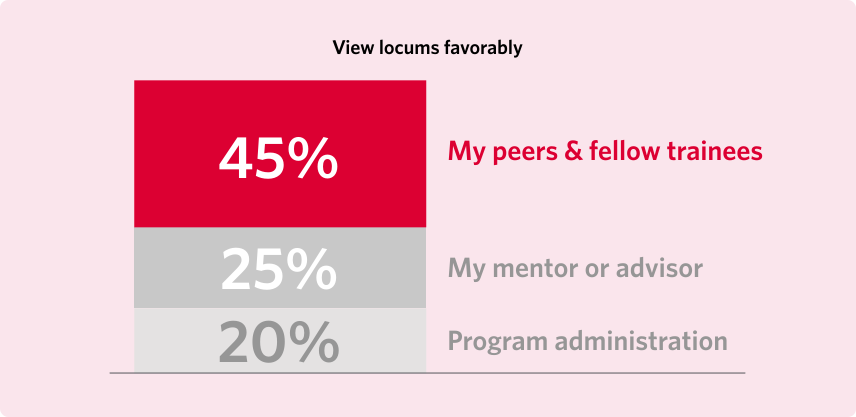
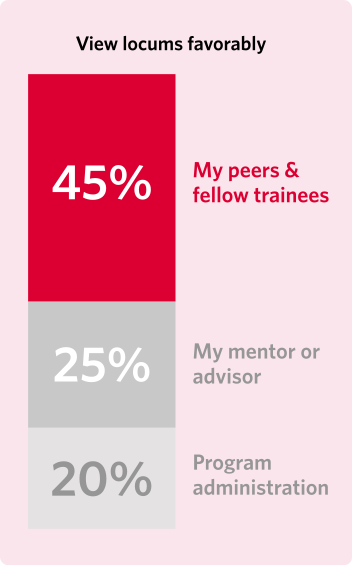
Fellow trainees tend to view locum physicians favorably, but mentors and program administrators do not, with only 25% and 20%, respectively, viewing locums favorably.7
We've brought locum physicians in to help cover 24-hour calls alongside our residents, and it's been a genuinely positive experience clinically. Our residents get firsthand exposure—working directly with locums and hearing about their experiences.
That said, the financial reality is significant. Administration has been vocal about not relying on them long term, so I'm navigating two very different perspectives. Personally, I see real value in the model, but my residents aren't actively asking about locums work. They tend to be focused on private practice.
—Mary Alice Johnson, program director, FSU Pensacola OB-GYN residency program
This exposure to negative sentiments may be a factor in why only 15% of locums-experienced physicians took their first assignment within one year of completing training.6
Research indicates the reasons physicians provided for not beginning locums sooner point to the awareness and perception disconnect among early-career physicians:
50% had already accepted a full-time position before learning about locums
23% had a lack of information about how locums works
14% hadn't heard of locums as a career option at all when they completed training
Benefits and drawbacks
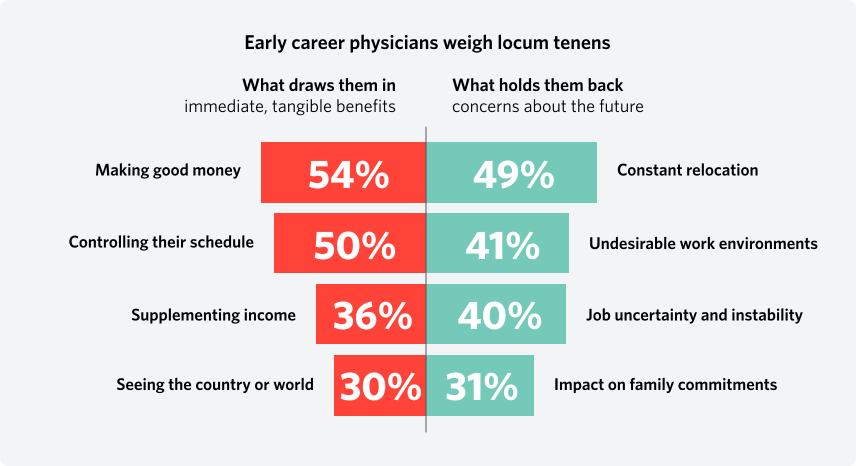
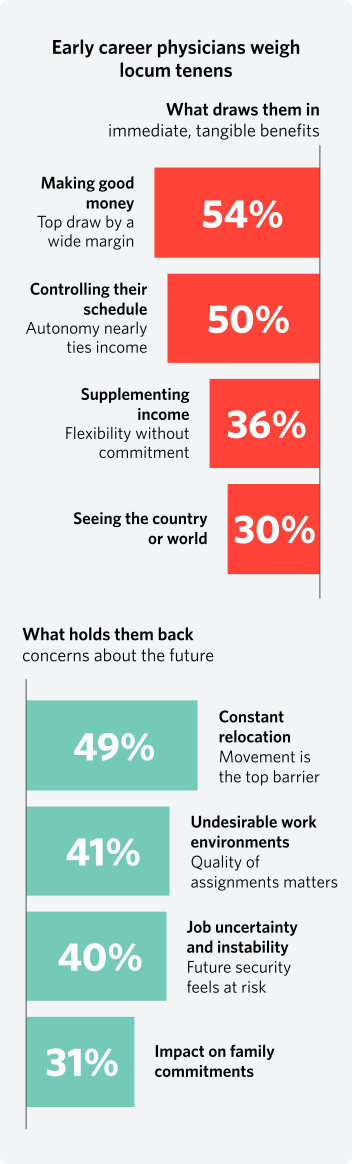
When thinking about locums, residents and fellows are drawn to the benefits that seem immediate and tangible. The drawbacks for them represent hazier fears about the future, and these perceived “cons” may result from their lack of knowledge about locums and how it works.
The top benefits of locums, say residents and fellows, are making good money (54%), schedule control (50%), and income supplementation (36%).8 The aspects they find least appealing include moving from place to place (49%), undesirable work environments (41%), and job uncertainty (40%).8
With more information about the flexibility of locum assignment lengths and locations, demand for their specialty, and what the day-to-day life of a locum looks like, the tangible financial benefits of locums may strongly outweigh the perceived drawbacks for early-career physicians.
Source: CHG Healthcare Resident Career Planning Study, Oct 2023
The financial reality: Why early-career earnings matter to physicians
The debt burden of newly graduated physicians continues to increase, and new federal policies will likely make that burden heavier. According to the AAMC 2025 Graduation Questionnaire, the median debt for the class of 2025 is $215,000, with 70% of graduates carrying education loans. This is up from a median of $202,000 in 2020.7
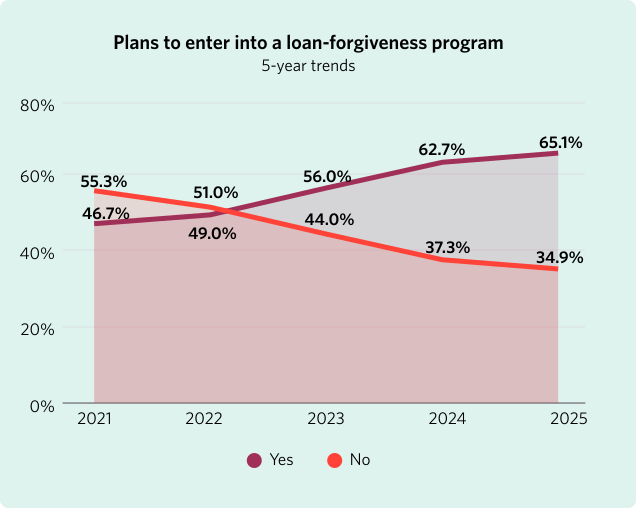
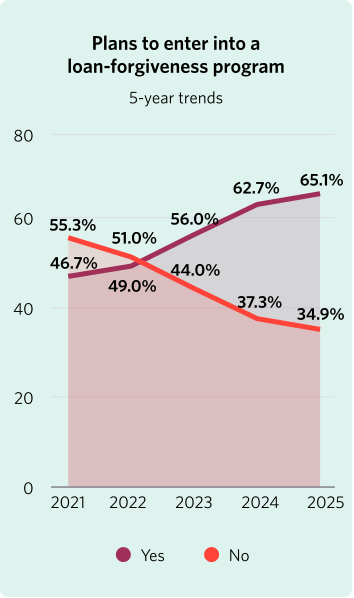
That same survey found that 65% of graduating medical students planned to enter a loan-forgiveness program, and of those, 88% intended to pursue the Public Service Loan Forgiveness (PSLF) program.7
Meanwhile, changes to federal law may drive more medical students to take on expensive private loans. H.R. 1, commonly known as the One Big Beautiful Bill Act, imposed annual loan caps of $50,000 for medical students and a $200,000 lifetime limit, which, notably, is below the current median debt level. Additionally, H.R. 1 eliminates Grad PLUS loans for new borrowers as of July 2026.
More than ever, early-career physicians will be looking for ways to get out from under their medical debt as quickly as possible. Loan forgiveness is one route, although that option is narrowing. Locums offers the possibility of higher earnings or income supplementation, which can help physicians implement an aggressive debt payoff strategy.
Is locums a good fit right out of training?
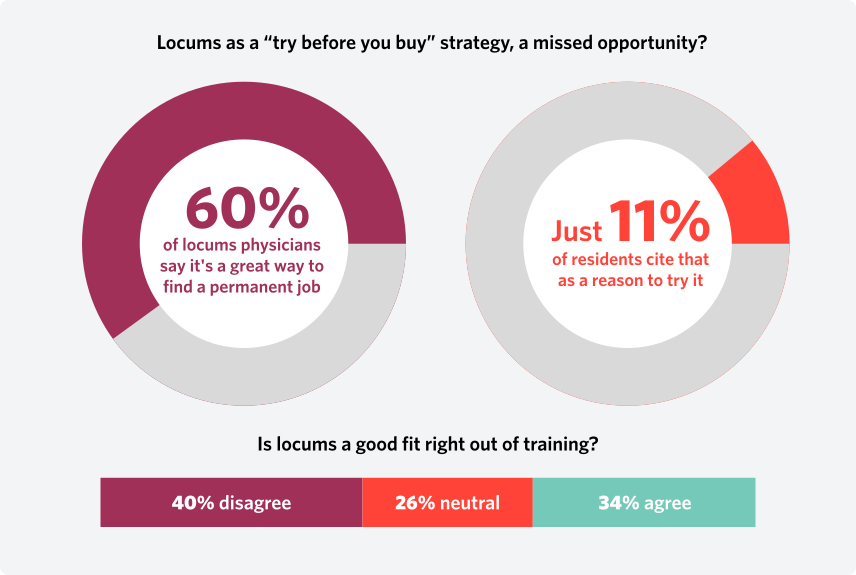
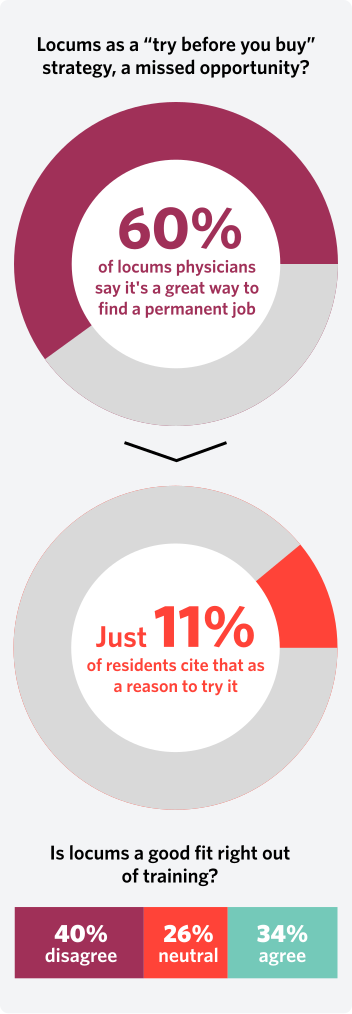
The financial benefits of working locums are clear for early-career physicians. But should locums be their first step after training? Physicians who eventually worked locums—but didn't start immediately after training—have a mixed view. In a survey of 613 locums-experienced physicians, 34% agree that locums is a great fit right out of training, while 40% disagree. Another 26% are unsure.6
One aspect of working locums right out of training is the idea that you can use it to explore practice settings and new cities before settling on a permanent role. This is a strategy often employed by more tenured physicians: 59% of locum physicians “somewhat” or “strongly” agree that locums is an effective way to find a permanent job.6
However, only 11% of residents take this view, according to the 2023 Resident Career Planning Survey.7 This disconnect ties back to the lack of locums awareness and education among residents, who may not be knowledgeable about locums as a “try before you buy” strategy for exploring healthcare organizations, practice settings, and even new regions of the country.
Finding a practice is so much about being a good fit. And that's what locums can do for us, is that it gives you an opportunity to work with the oncologist, the nursing staff, to see the area, the location, you can experience in a brief period, and without committing blindly.
—Dr. Sarah Ali

With locums, I was able to explore what kind of practice I actually wanted, the type of colleagues I'd enjoy working with, the workload I could handle, the autonomy, and which administrations I worked well with. It let me try out different hospital systems, different nursing staff, and different practice environments to figure out what I liked and what I didn't—and then use all of that to guide my search for a permanent position.
—Dr. Trung Tran
Early-career physicians are entering the workforce carrying the weight of educational debt in an era of economic and regulatory uncertainty. They want to start earning money, move beyond the resident lifestyle, and begin thinking about family. Locums offers pathways for earning more while taking on a variety of physician practice models to find the right fit. But residents and fellows simply don’t know enough about locums to seize the opportunity before they accept a permanent role. By the middle of their careers, the awareness gap has closed, and physicians are working locum tenens in a variety of ways to seize more control over their finances and lives.
4. Mid-career: The generation under pressure—reclaiming balance
Mid-career physicians have settled into their practices and specialties, and many have started raising families. This cohort—those aged 45 – 54 or with 10 – 20 years of experience—face the most competing demands for their time and attention, and the day-to-day realities of their medical practice may be starting to take a toll. On top of that, recent federal policy changes make practice economics more untenable. For this group, locums isn’t about career exploration; it's a practical solution for earning more income/or creating greater balance in their lives, and protecting their well-being.
Well-being: Highest risk, greatest gains
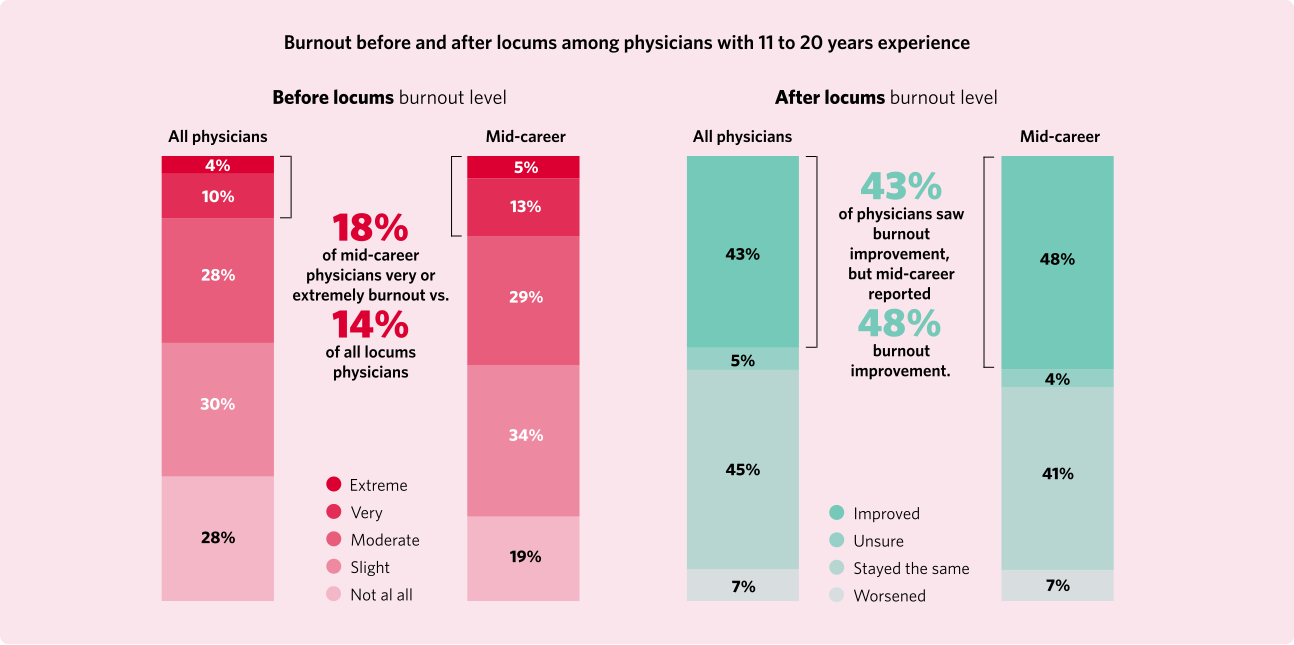
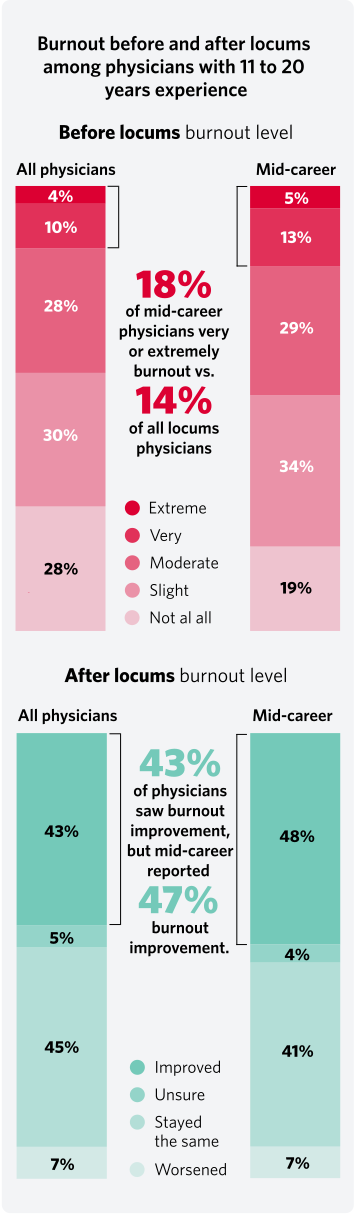
Mid-career physicians face the highest levels of burnout and occupational strain. Mid-career is when life becomes an impossible juggling act with family obligations, long work hours, and practice economics all up in the air. Among mid-career physicians, 18% report extreme occupational strain, compared to 14% overall.6
On the other hand, these physicians are the most likely to say their well-being improved after starting locums (48% vs. 43% overall).6 This is a positive signal that locums may be an effective strategy for physicians seeking to restore balance during this demanding career stage.
The word I'd use is liberating. In my previous job, I was doing three to four hours of EMR work every night, rounding every day, including weekends—I was exhausted. Burnout is a real thing. Locums has given me new energy. When I leave an assignment, I'm done. I have at least a week to recuperate, explore other things, pick up new hobbies, travel. As doctors, we're not used to that—we've been going continuously for years. But it's happening, and it's been transformative.
—Dr. Martin Rifkin
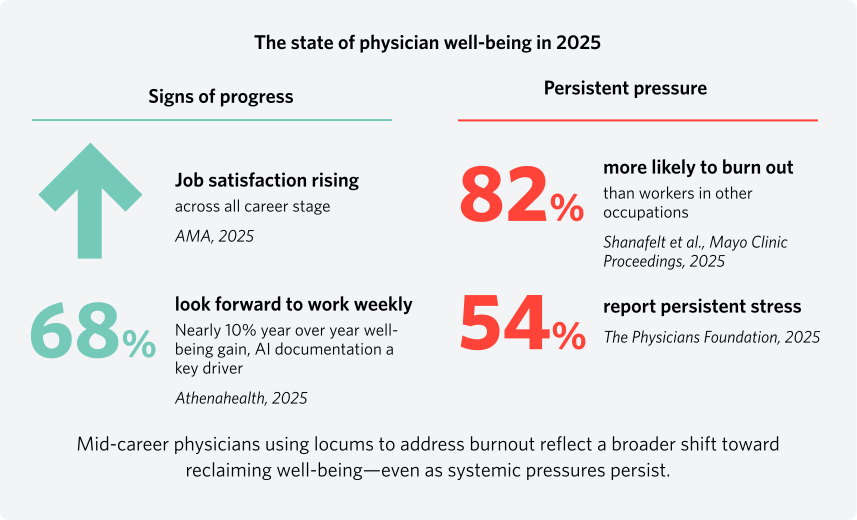
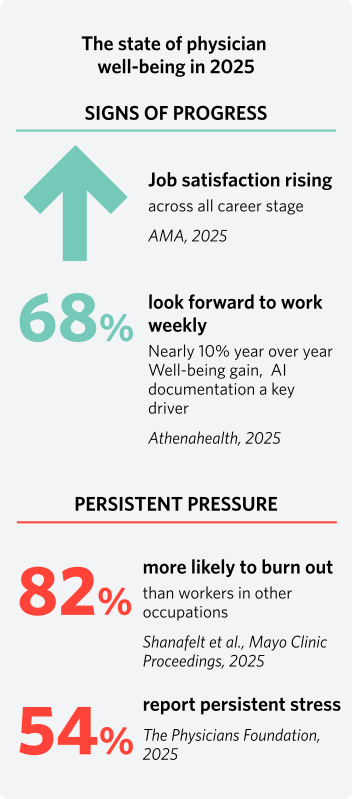
The use of locums as a physician burnout solution reflects a long-term, tidal shift in the profession toward prioritizing balance and well-being. Burnout has been a key concern in the industry for many years, and data have begun to show progress as physicians adopt sustainable practice models. For example, American Medical Association data show that measures of job satisfaction and feeling valued in the workplace are on the rise across all career stages after residency or fellowship training.9
Similarly, the 2025 Athenahealth Physician Sentiment Survey found a nearly 10% year-over-year improvement in physician well-being, with a full 68% of physicians saying they look forward to coming to work at least once a week.10
Despite this progress, burnout is a lingering problem. Physicians are 82% more likely than other occupations to experience burnout.11 Over half of physicians report persistent stress levels, according to the Physicians Foundation.12
Locums appears to be one tool that physicians are deploying in a monumental effort to bring balance to the profession. Burnout and other systemic pressures remain, but increases in well-being suggest that the flexible physician jobs provided by locums may be making a difference alongside other efforts.
Economic pressures on private practice
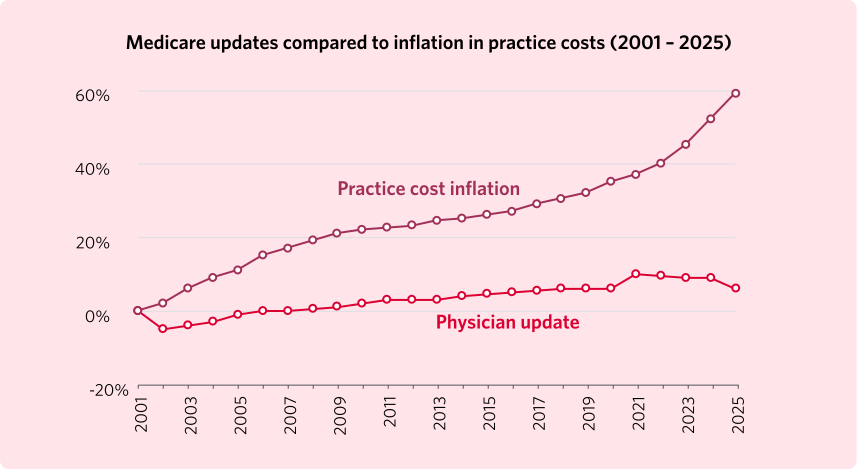
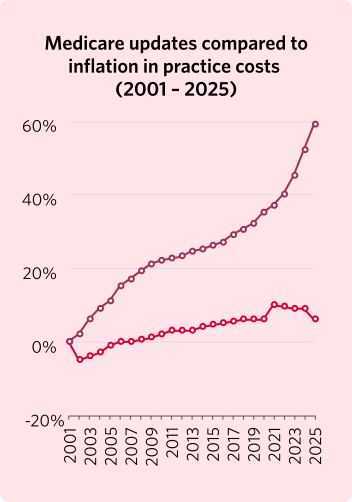
Physicians have faced multi-decade regulatory moves that are squeezing the economic model of running a medical practice. For example, Medicare physician payments declined 33% from 2001 to 2025 when adjusted for rising practice costs, according to an American Medical Association analysis.13 Physician Medicare reimbursements are not tied to annual inflation adjustments—unlike hospitals and other healthcare providers—so the disconnect between Medicare reimbursements and actual practice costs grows wider with each passing year.
H.R. 1, or the One Big Beautiful Bill Act, temporarily increased Medicare physician payments by 2.5% for 2026 only. Without further legislative action, this temporary fix will expire in 2027. The AMA notes that the law’s overall impact on the federal deficit could automatically trigger additional Medicare spending cuts, leaving physicians financially worse off than before the 2026 increase.14
Source: Federal Register, Medicare Trustees’ Reports, Bureau of Labor Statistics, Congressional Budget Office
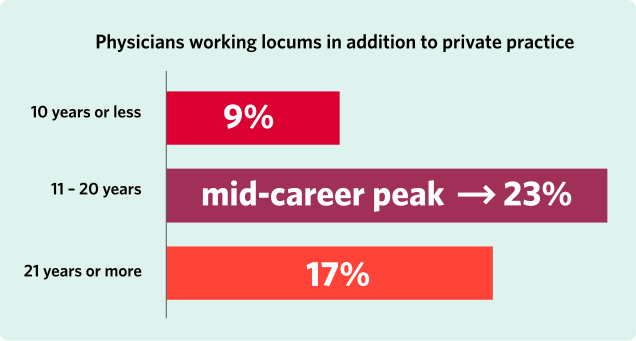
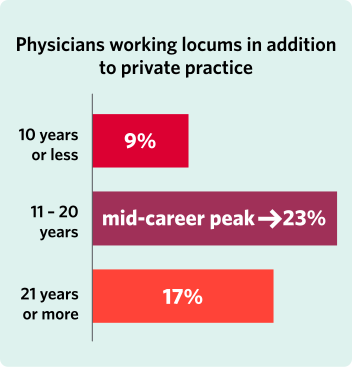
The tightening financial vise grip has physicians, especially those in private practice, looking for ways to grow their income. One method is supplementing private-practice income with locums work. At 23%, mid-career physicians are the most likely to work locums in addition to private practice.6
Conversely, working locum tenens full time offers a way to achieve higher compensation without the overhead burden of running a practice—a burden that fixed-rate Medicare payments no longer support. On average, physicians who work locums full time make over $32 more per hour than their permanently employed colleagues.
Balancing family obligations
As mentioned earlier, physicians with and without children under 18 engage in locums work at nearly identical rates to non-locum physicians. Mid-career physicians who are trying to balance work and family, while maximizing their earnings, continue to engage in locums work—but the pattern shifts a little bit in favor of proximity and income supplementation.
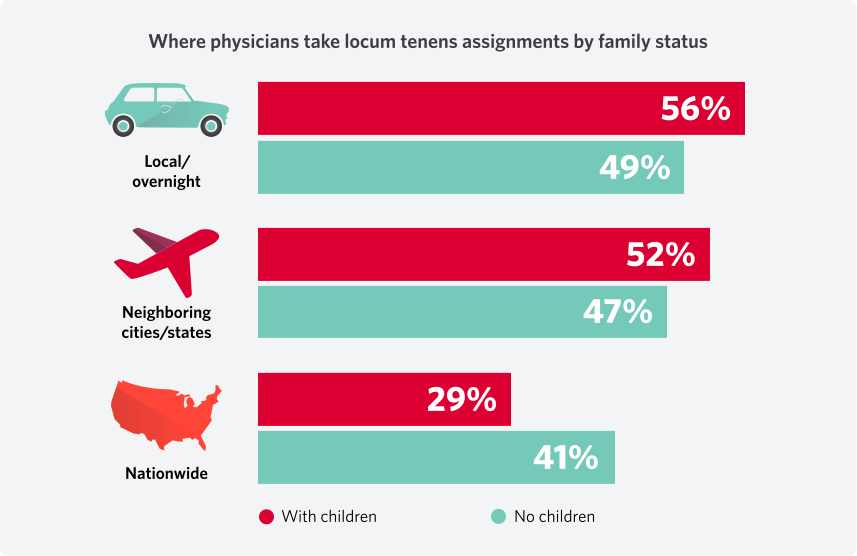
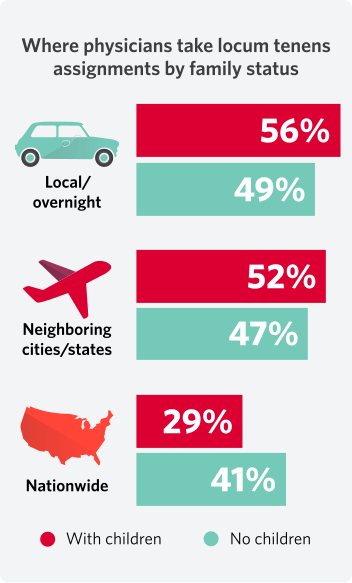
For instance, 56% of locum physicians with children under 18 veer toward local assignments, compared to 49% of physicians without children.6 Expanding the distance slightly, 52% of locum physicians with children take assignments in neighboring cities or states, compared to 47% of physicians without children.6
Similarly, married physicians are more likely than unmarried physicians to take local locums assignments (54% vs. 45%).6
If I could do my vacation time, I would gladly. I live in two cities. I work in one city and I actually go home over weekends. I try to find some work that's either near my home or near my work where I can stay or at least at a distance that is doable. If I'm on the East Coast, I don't want to find something on the West Coast.
—Dr. Zartach Gul
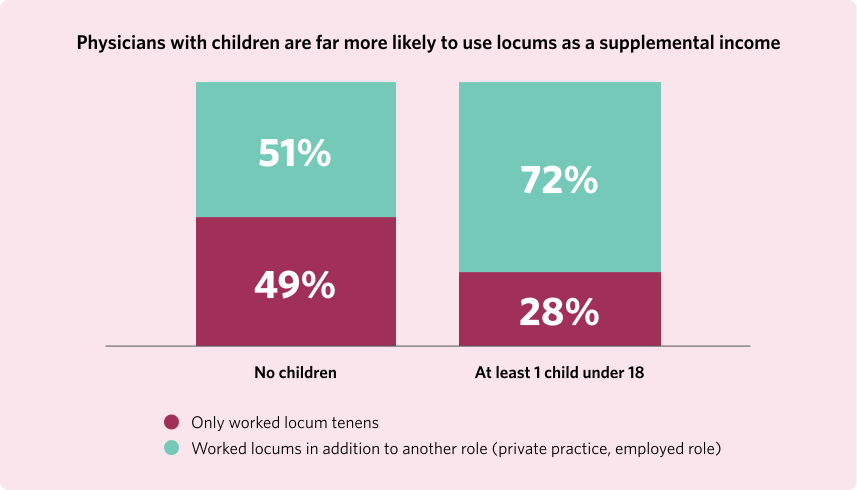
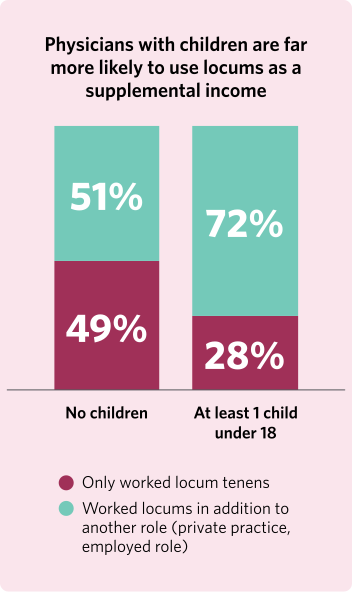
Locum physicians with children under 18 may face additional financial challenges, driving the need for supplemental income. A full 72% of locum physicians with children use locums as a supplement to another role, while only 51% of those without children do so.6
Contrary to what I imagined, the on-the-ground private practice job actually gave me less family time than a job where I travel and live in a different community for seven to ten days at a time. I was pleasantly surprised by that. Once you get done with your locums obligation, you can have up to two or three weeks off to have good quality time—to support your spouse and be there for your children. You can engineer your schedule with maximum flexibility.
—Dr. Benjamin Feldman
An ongoing career tool
Mid-career physicians may turn to locums work for a variety of reasons, from supplementing income to creating greater work-life balance. No matter the motivation, once mid-career physicians become experienced and familiar with locums, they are the most likely of any career cohort to continue or resume working locums.6 The need or motivation for working locums may change over time, but mid-career physicians see ongoing value in locums as a career option.
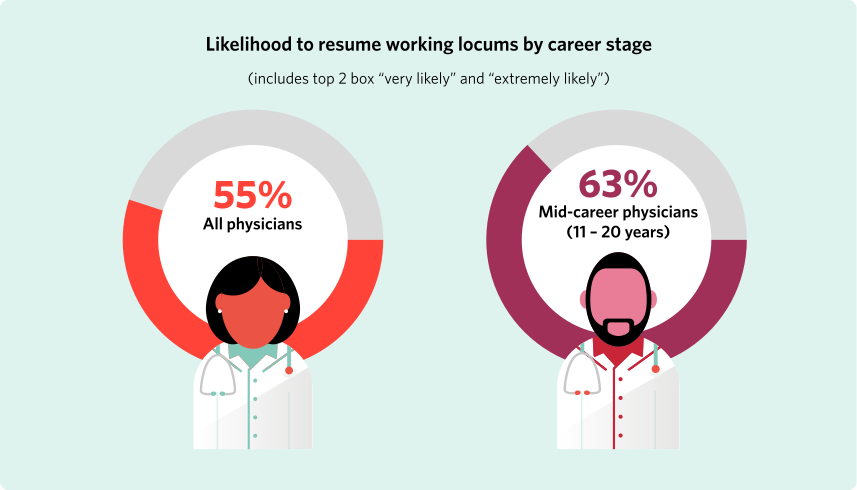
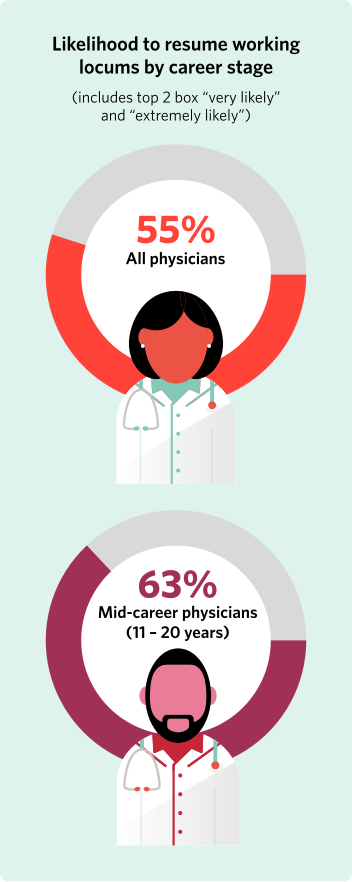
For mid-career physicians, the status quo may feel unsustainable. Practice costs continue to increase while Medicare reimbursements fail to keep up. Meanwhile, family obligations grow heavier and physician well-being declines. In this perfect storm, locums is a lifeline that gives physicians a greater ability to control their income, manage their schedule, and mitigate burnout. For mid-career physicians, locums offers something different: a crucial support that enables them to keep working and contributing on their own terms.
5. Late career: Staying engaged on their own terms
As late-career physicians approach retirement age, they’ve accumulated decades of invaluable experience and hard-won wisdom. They’ve also endured years of growing pressures like onerous administrative burdens and tightening practice economics. The idea of retirement to escape these challenges is alluring—but late-career physicians often aren’t ready to step away from a profession that they love and that they know needs their contributions. Locum tenens offers an ideal pathway for staying engaged in patient care while leaving behind the physical and administrative demands of full-time practice.
The demand for experienced physicians
When to retire seems like a personal decision—and it is—but for late-career physicians, retirement choices can affect the entire healthcare system and the patients who rely on it. The U.S. faces a long-standing, severe physician shortage that will only worsen over time, particularly in rural areas.
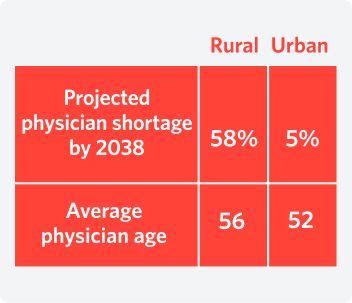
Nonmetro areas will see a 58% shortage of physicians by 2038, and the average age of a rural physician is 56 years, which is four years older than that of physicians in metro areas.15,16 In this dire situation, late-career physicians should be given all the tools they need to continue practicing for as long as they wish.

Sources: Physician Shortage: HRSA, 2025; Average age: AAMC, 2023
Already filling geographic gaps
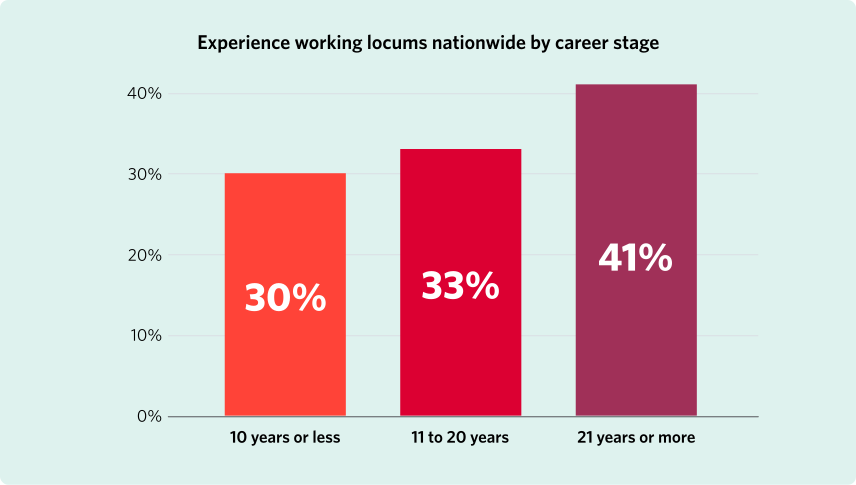
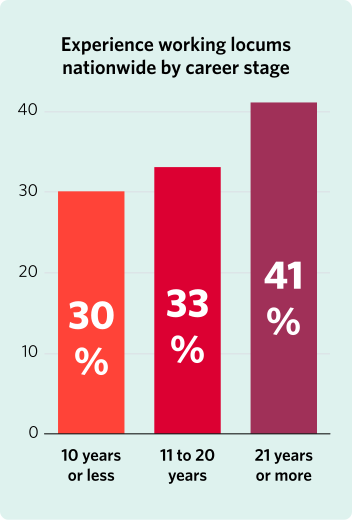
Locum tenens is a powerful career tool that allows late-career physicians to continue practicing on their own terms. Late-career physicians have fewer obligations at home and greater freedom to travel, which makes them uniquely suited to take locums assignments in underserved areas. In fact, physicians with 21+ years of experience are significantly more likely than their younger counterparts to take assignments nationwide.6
Currently, 41% of late-career physicians are willing to take assignments anywhere in the country, compared to 30% of early-career (10 years or less) and 33% of mid-career (11 – 20 years) physicians.6
The desire to keep practicing
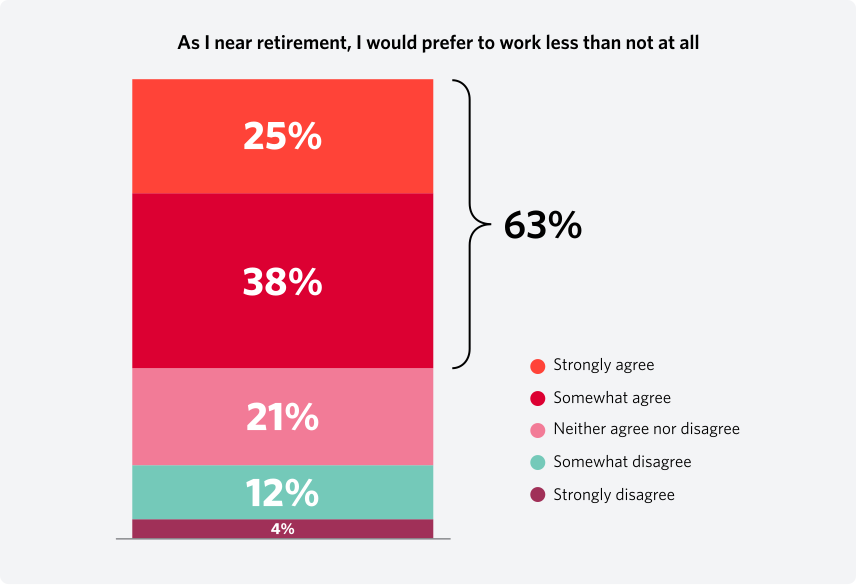
The majority of late-career physicians prefer to ease into retirement by scaling back their hours, rather than jumping straight into full retirement. As they near retirement, 63% of late-career physicians say they would prefer to work less rather than not work at all, according to CHG Healthcare's 2024 Late Career Survey.17
I look at locums as retirement with interruptions. You work hard, you're in it—and then you sign out and you're off for a week, ten days, two weeks. During that time, you're basically retired. You get to experience retirement without committing to it. I don't think of locums as a bridge to retirement. I think of it as prolonging your career while avoiding retirement—but still getting to live what retirement feels like. Honestly, I haven't even thought about retirement since I started doing this. I probably would have retired already if this wasn't available.
—Dr. Jeffrey Miller
I'm only 60—I'm not ready to retire. I still feel young, I'm in good shape, and I've got several good years left in me. Locums has been a great transition between full-time medicine and retirement. The stress is lower. You go in, see your patients, interact with the staff—and then you go home. You actually have a life outside the office.
—Dr. Jeffrey Culpepper
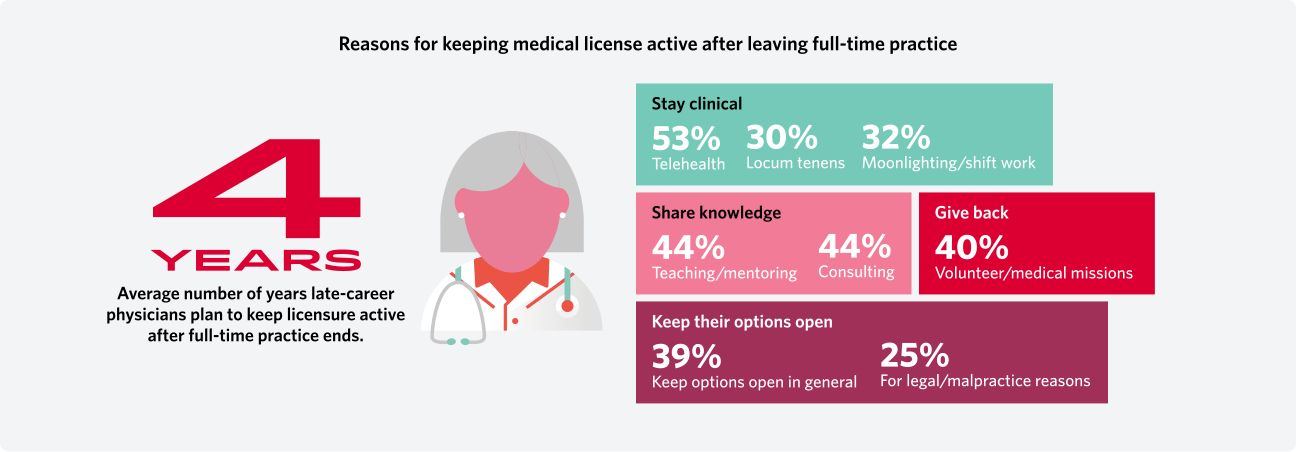
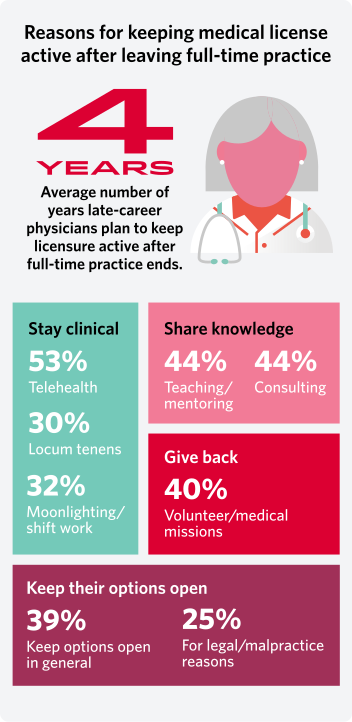
There are many ways for physicians to remain professionally active after leaving full-time practice. On average, late-career physicians say they plan to keep their medical license active for four years after they’ve stepped away from their full-time practice.17 Some of the ways they plan to stay active include telehealth, consulting, teaching/mentoring, or medical mission opportunities. Locums is another avenue, and 30% say they’d keep their license active to take on locums assignments.17
Motivations for working beyond retirement
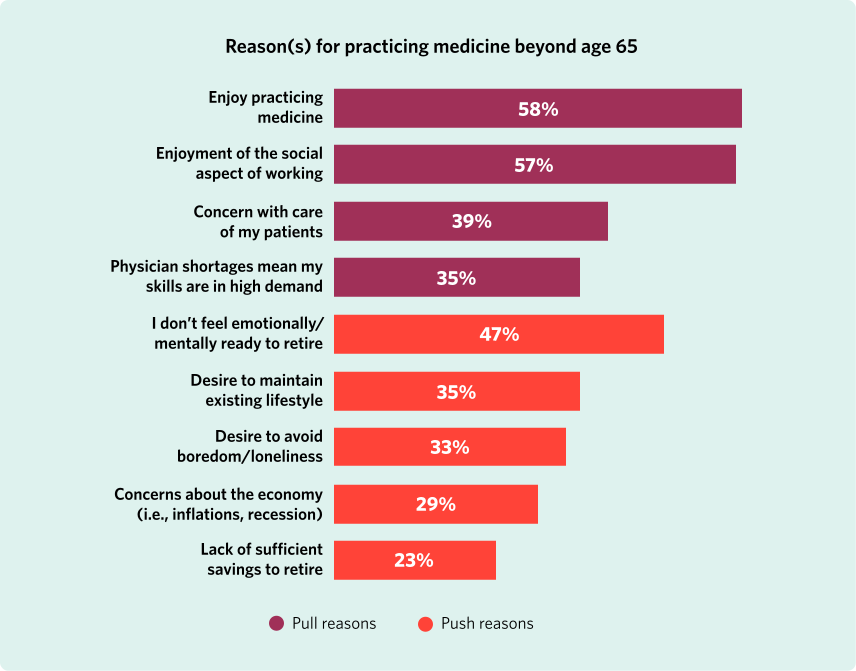
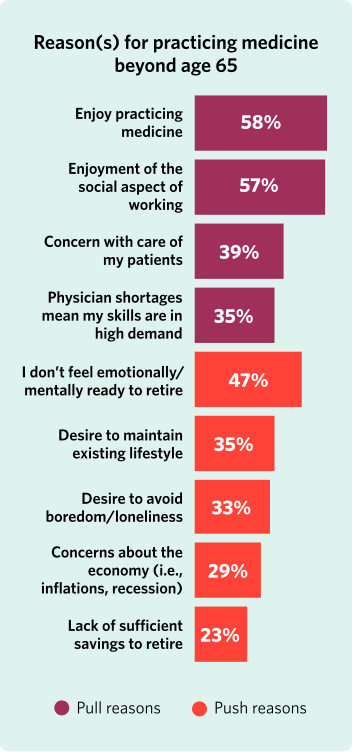
Most physicians who keep practicing past the age of 65 say it’s because they genuinely love medicine and the people in it. Beyond that motivation lies a myriad of factors that keep physicians working into their later years—including financial realities.17
The reasons physicians provide for working past retirement age fall into two categories: pull reasons that result from internal desires and push reasons that result from external pressures.
The Late Career Survey found that the top pull factors include a love of medicine, a desire to maintain social connections, and a continued concern for patient care.17 These motivations are easily expressed and easily understandable, and they may predominate the issue of working beyond retirement. Push reasons lie beneath all of that and include not feeling emotionally ready to retire, a desire to maintain a current lifestyle, and a fear of boredom or social isolation.17
These fears and desires make it harder to step away from practicing medicine than continuing to work, despite the physical and emotional challenges that come with aging.
Different priorities when evaluating opportunities
With an entire career’s worth of experience under their belt, late-career physicians have different considerations when evaluating locums opportunities. They aren’t looking to build new skills or explore new practice settings. Instead, they want to minimize administrative and logistical hurdles while continuing to contribute to the profession.
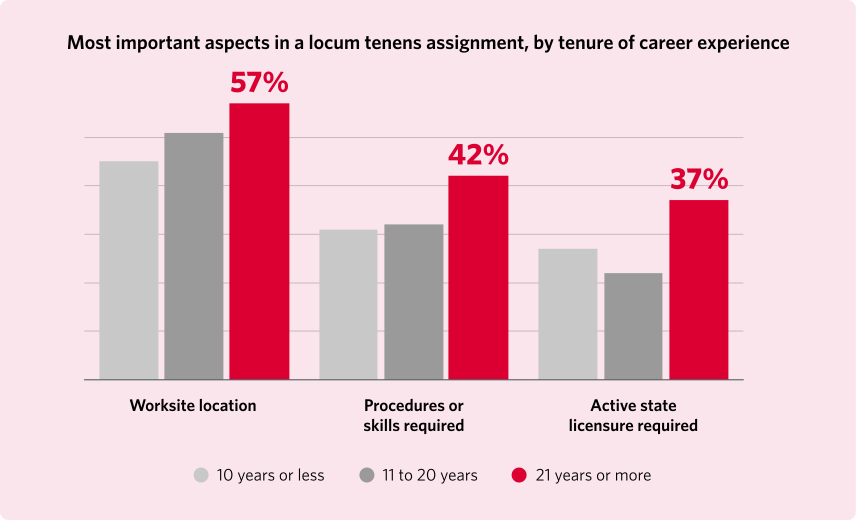
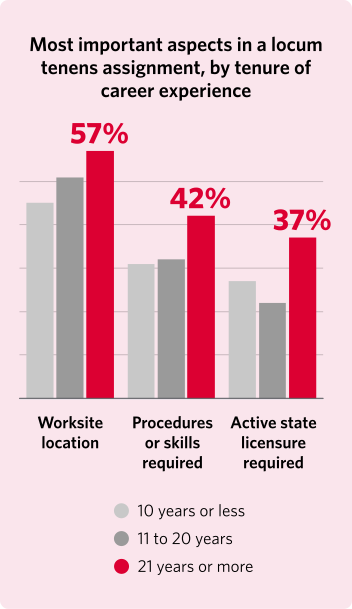
According to the Locums Experience Survey, the most important aspects in a locum role for late-career physicians include:6
Procedures and skills required, according to 42% of late-career physicians (compared to 31 – 32% of younger physicians), which may reflect a desire to work within their comfort zone and physical capabilities
Worksite location, for 57% of them (compared to 45 – 51%), demonstrating that proximity and logistics matter more for late-career physicians
Active state license requirements, say 37% (compared to 22 – 27%), which points to administrative complexity as a significant consideration
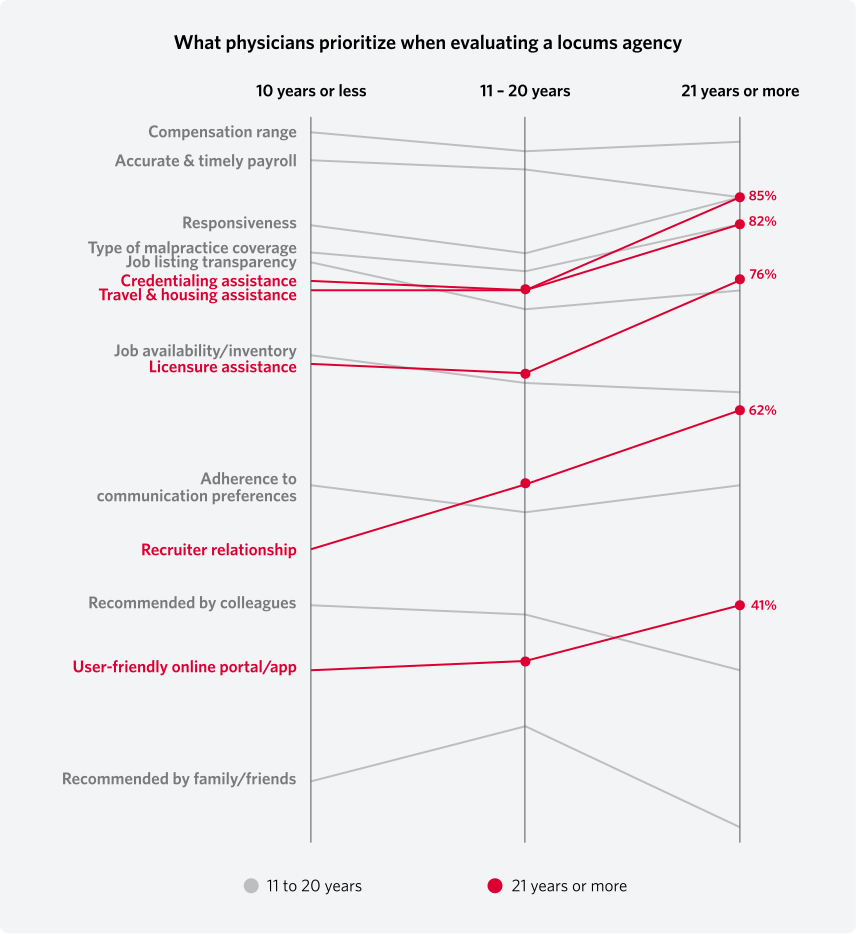
When determining which staffing agency to work with, late-career physicians also have different priorities reflecting their tenure and unique needs. Late-career physicians have lengthy work histories, which complicate the credentialing and licensure process. They also have deep-seated roots with family, home, and community ties. Their hard-earned sense of professional judgment means they have firm ideas about what they want and don’t want, and they need technology to be intuitive and easy to use.
For these reasons, late-career physicians prioritize the following factors higher than younger cohorts: credentialing and licensure assistance (85% and 76%), travel and housing assistance (82%), recruiter relationship (62%), and a user-friendly online portal/app (41%).6
Concerns about practicing beyond 65
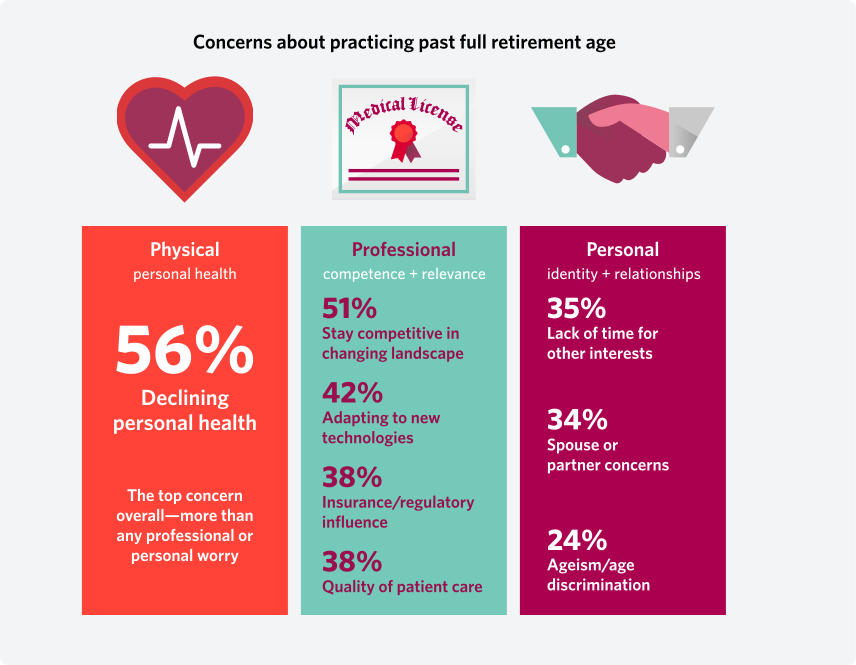
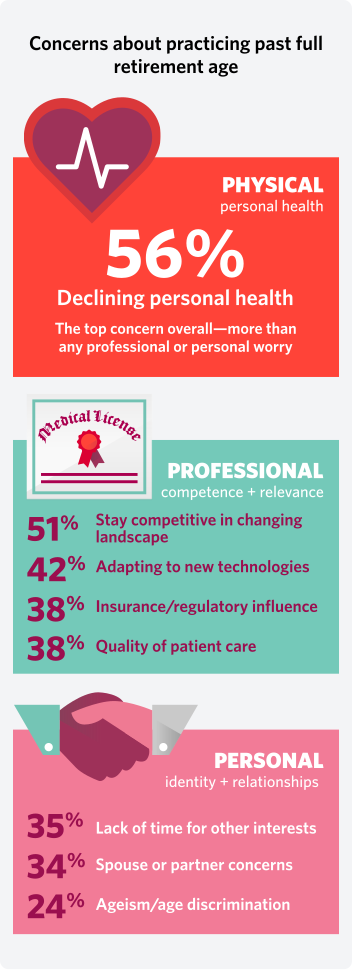
Not every physician is able to work beyond age 65, whether they truly want to or not. Several concerns may hold some late-career physicians back from working into their retirement years. Those concerns fall broadly into three categories: physical, professional, and personal.
In the physical category is declining health, which is the most common concern among late-career physicians, with 55% citing that factor.17 For some, the physical limits of aging may outweigh any aspirations to keep working in a career they love.
Professional concerns reflect a practice environment that has changed dramatically over a two-decade-plus career. Regulatory and administrative demands have grown increasingly complex and burdensome, and late-career physicians may be tired of navigating yet another change. In the survey, late-career physicians name staying competitive (51%), adapting to new technologies (41%), navigating regulatory complexity (38%), and maintaining quality patient care (38%) as the most urgent professional concerns.17
Life concerns surrounding personal goals and relationships aren’t as pressing as physical and professional concerns, but they shouldn’t be overlooked. Some of these concerns include having time for other interests (35%), spouse or partner (34%), and ageism (24%).17
Notably, working locums can help alleviate many of these concerns and allow physicians who want to keep working to do so. With locums, physicians can reduce their work hours to a level that’s comfortable for their health and well-being. Locums also lets physicians bypass onerous administrative work and focus on patient care. Working a reduced schedule also enables physicians to devote time to personal interests and relationships.
Sources: CHG Healthcare Late career survey, June 2024
Many late-career physicians are motivated to keep working into their retirement years, drawn by a desire to keep contributing to patient care and, perhaps, pushed by financial concerns and fears of boredom and isolation. With physician shortages persisting and worsening, these highly experienced physicians are a valuable and under-utilized resource. Locums offers a model that meets these physicians where they are, accommodating their desire to continue practicing while respecting the realities of aging. The following section will discuss other ways that locums meets physicians where they are, providing solutions for unique life and career demands.
6. A strategic tool—not for everyone, not forever
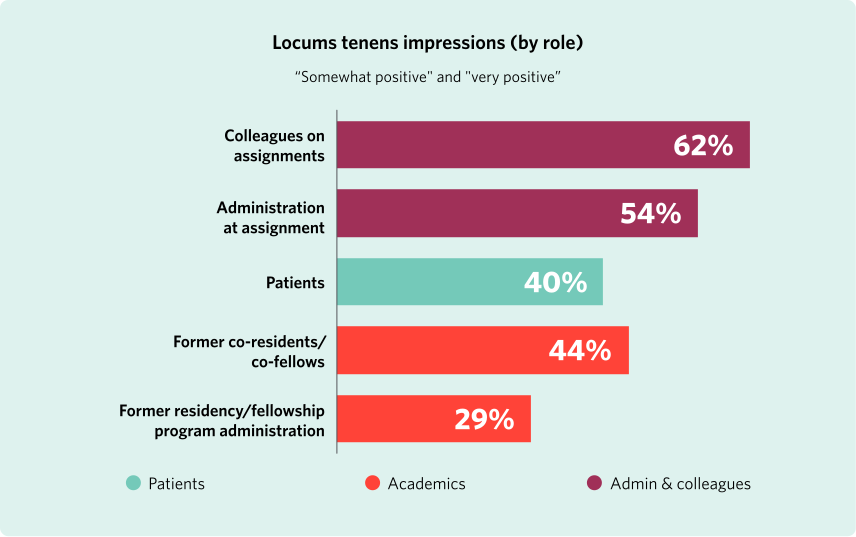
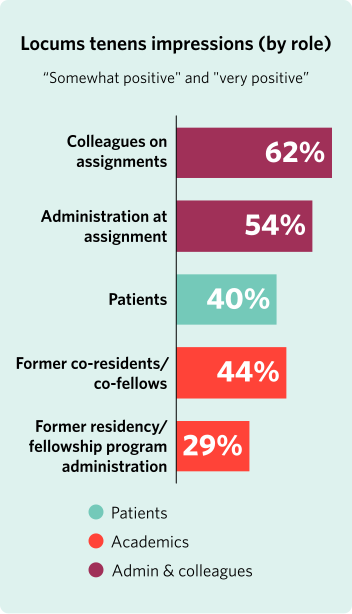
Views about locums have strengthened over time, and those with the closest exposure express the most positive impressions. For example, 62% of colleagues on assignments and 54% of administrators at assignments have favorable views of locums.6 Patients also view locums favorably, in general, with 40% holding positive views, 41% holding neutral views, and only 10% feeling negative about locums.6
However, perception still lags in academic settings, which tend to have lower contact with practicing locum physicians. Only 44% of fellow trainees have favorable impressions of locums, and only 22% of administrators do.6
I wondered if patients might view locums care negatively, but I haven't found that to be the case. When you arrive at an assignment, people really want you there. They may have been waiting months for care, and suddenly they can get an appointment in three to five days. In general, patients are very appreciative—just for that reason alone.
—Dr. Benjamin Feldman
Sustained engagement
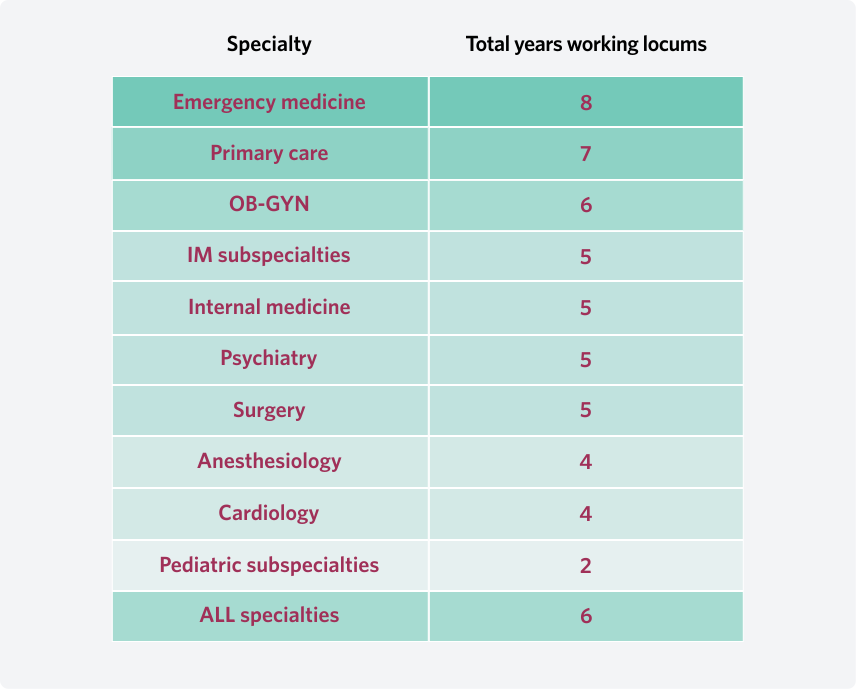
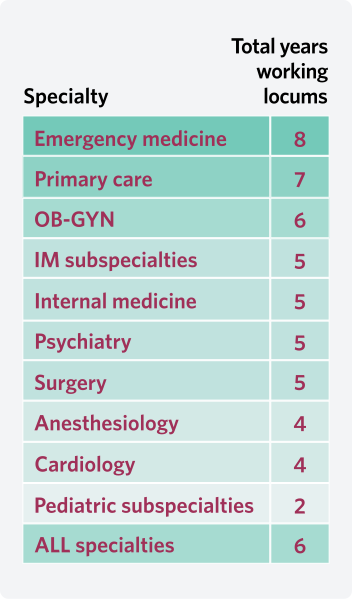
While locum tenens assignments are contractually finite, physicians build extended careers within the model. Emergency medicine specialists average eight years working locums, primary care physicians seven years, and OB-GYN providers six years—tenure patterns that challenge the perception of locums as inherently transient work. This longevity suggests locums represents a deliberate, sustained career choice across multiple specialties.6
People think of locums as transient—you're just a stand-in. But a lot of these assignments aren't just three months. They're posted for a couple of years while a clinic works to fill a position permanently. I've been going out to the same facility every month for over two years. That kind of long-term commitment makes continuity of care very manageable—and in my experience, it's really not the issue people assume it is.
—Dr. Benjamin Feldman
Satisfaction signals
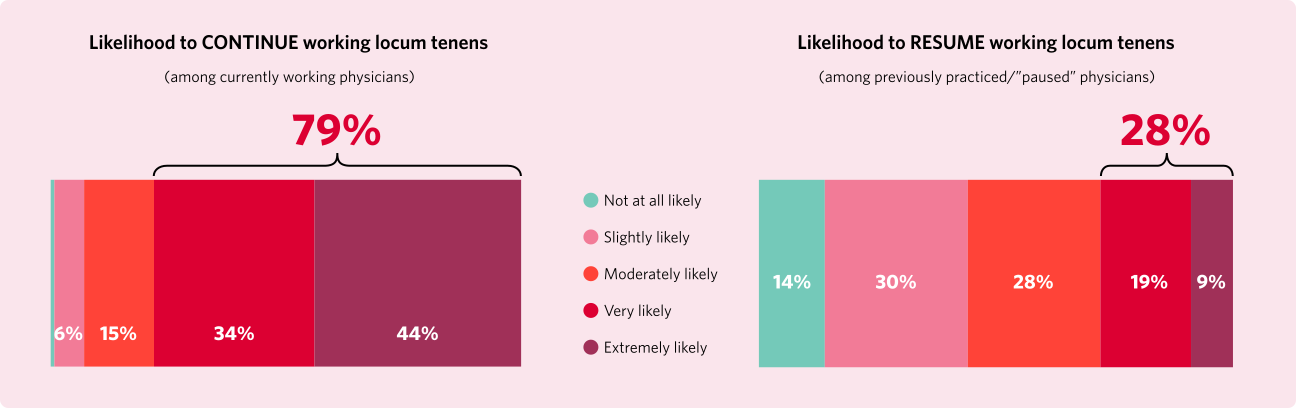
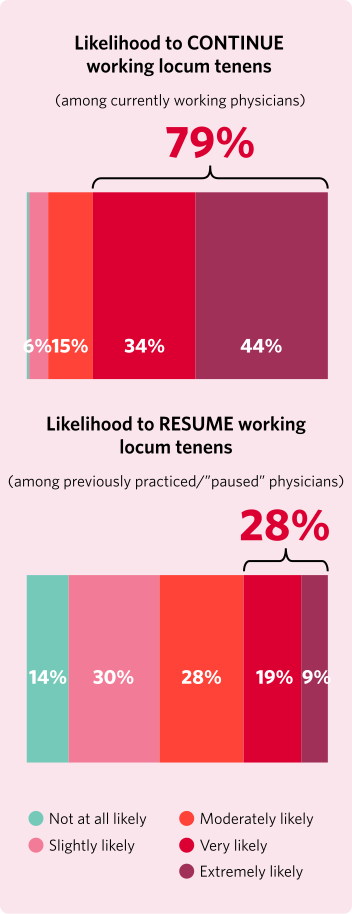
When it comes to physician job satisfaction, it’s clear that locums successfully meets the needs of physicians who are currently working this way. These physicians express strong satisfaction with locums, with 79% saying they are very or extremely likely to continue.6
Among those who have stopped working locums, 28% say they are very or extremely likely to resume at some point.6 Locums isn’t a one-time solution, but a lever that can be pressed at various points in a physician’s career as their situation and needs evolve.
The right tool at the right time
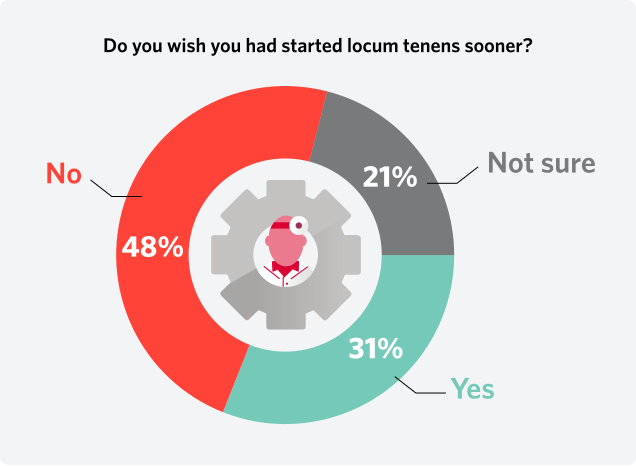
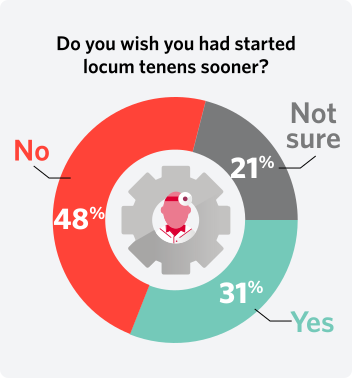
For a strong majority of physicians who’ve worked locums, it has been a tool that’s served a specific purpose at a specific point in their career. A full 69% of respondents say they don’t wish they’d started working locums sooner, which means locums became the exact right solution at the right time for them.6
"I thought about locums earlier, but looking back, the timing was right. It came at a point in my career where I needed a change—more time, a new perspective, more energy. And that energy has been sustained by the new locations, the new people, and the variety. If I'd been much older when I started, I'm not sure I'd have the energy for it now. It came at the right time for me.
—Dr. Martin Rifkin
As more physicians become experienced with locum tenens work, overall perceptions of locums are changing. Physicians are overwhelmingly satisfied with the experience of working locums, and their colleagues and patients view them positively. Locum tenens is gaining professional acceptance as a tool that allows health systems to serve their patients and provides physicians with a powerful tool to address challenges at every stage of their career. The value of locums isn’t that it’s right for every physician at every stage, but that it’s there for them when they need it.
Footnote
CHG Healthcare Locum Tenens Awareness & Perception Survey March 2016
CHG Healthcare Locum Tenens Awareness & Perception Survey, November 2025
CHG Healthcare Locum Tenens Awareness & Perception Survey, May 2019
CHG Healthcare Locum Tenens Awareness & Perception Survey, May 2024
CHG Healthcare (internal data) compared to the overall physician population indexed by Definitive Healthcare (as of April 2026)
CHG Healthcare Locum Tenens Experience Survey — Physicians, January 2025
CHG Healthcare Resident Career Planning Survey, October 2023
Association of American Medical Colleges (AAMC). Medical School Graduation Questionnaire (GQ): All Schools Summary Report. AAMC, 2025.
American Medical Association. "Burnout Eases for Doctors at Every Career Stage as Support Rises." AMA, July 22, 2025.
athenahealth 2025 Physician Sentiment Survey. Conducted in partnership with The Harris Poll, 2025.
Shanafelt TD, West CP, Sinsky C, et al. "Changes in Burnout and Satisfaction With Work–Life Integration in Physicians and the General US Working Population Between 2011 and 2023." Mayo Clinic Proceedings.
The Physicians Foundation. The State of America's Physicians: 2025 Wellbeing Survey. The Physicians Foundation, 2025.
American Medical Association. "Medicare Physician Pay Has Plummeted Since 2001." AMA, 2025.
American Medical Association. "Changes to Medicaid, the ACA and Other Key Provisions of the One Big Beautiful Bill Act." AMA, 2025.
Health Resources and Services Administration, National Center for Health Workforce Analysis. Physician Workforce: Projections, 2023–2038. HRSA, December 2025.
Association of American Medical Colleges. "Rethinking Rural Health." AAMC, 2023
CHG Healthcare Late Career Physician Survey, June 2024
Find what fits your life
Locums looks different for every physician. Share a few details and a Weatherby consultant will be in touch to explore what it could look like for you—no commitment, just a conversation.

Thank you,
We appreciate you contacting us. A consultant will be reaching out to you shortly to discuss this job opportunity. You can also get in touch with us directly by calling 954.618.5296.