
6 things to know about credentialing and licensing for NP and PA locums
March 16, 2026
For NPs and PAs new to locums work, credentialing, licensing, and privileging can feel intimidating. And while it is a complex process, it needn’t be daunting. When you work with Weatherby Healthcare, you’ll have access to all the resources and expertise you need to effectively manage the process.
If this is your first locums assignment, the process may feel more involved than what you’re used to, but it does become easier over time. Here are 6 things to know about credentialing and licensing for NP and PA locum tenens work.
1. What is credentialing, licensing, and privileging?
Credentialing, licensing, and privileging are three distinct processes that ensure patient safety by verifying healthcare providers' qualifications.
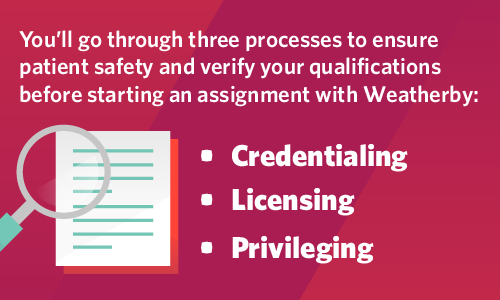
Credentialing includes verifying education, training, certifications, and professional history. It confirms your professional identity and qualifications.
Licensing refers to the legal authorization to practice in a specific state.
Privileging gives you permission to work at a healthcare organization.
It’s not always a linear process: Some steps happen simultaneously while others can’t begin until others are completed. Delays in one area may affect downstream approvals.
Why they choose locums: Locum tenens for surgical PAs
2. What does credentialing entail?
Once you’ve expressed interest in working with Weatherby, the company begins the internal credentialing process. By confirming your credentials and experience, Weatherby ensures you are qualified to work locums with the company.
To get internal credentialing started, you’ll need to have all the appropriate documents ready, including:
Medical licenses
DEA certification
Board certifications
Diplomas and proof of training
Life support certifications (must include hands-on)
Any malpractice or board inquiry information, if applicable
Contact information for three professional references
As a Weatherby employee, you will also need to submit various health tests and drug screens, such as TB testing and immunization documentation, as part of the process.
What you won’t have to worry about: Locum tenens clinicians working with Weatherby are W2 employees, so we handle malpractice insurance and employment logistics.
3. How long does credentialing take?
Internal credentialing for locum assignments with Weatherby can take 30–60 days or more, depending on specialty and facility requirements. But when there’s an immediate need, Weatherby’s team can sometimes expedite the process.
Work less, earn more: Why NPs opt to work locum tenens
3. How does licensing work?
Once an assignment is confirmed, licensing comes into play. Locum providers often work in multiple states, and they need to be licensed in each one of them.
Weatherby has dedicated employees who manage licensing and are intimately familiar with each state’s licensing process. They understand state board requirements, application quirks, and timelines. Licensing boards often give vague or high-level answers, and thanks to its deep experience, Weatherby staff know how to interpret and respond appropriately, avoiding missteps and delays.
The licensing team will assist with the initial application process by providing detailed instructions to ensure the correct application is submitted. They will also advise on the appropriate application pathway based on the provider’s qualifications.
Once your application is submitted, the licensing processors will track it and follow up with the boards. But for them to do this successfully, you must submit everything promptly. You may think you have plenty of time before a future start date, but licensing deadlines often align with credentialing committee meetings that occur much earlier.
4. When does privileging come in?
Privileging, credentialing, and licensing often run concurrently. Weatherby coordinates internal and site requirements to reduce duplication as much as possible. However, hospitals have their own regulatory and accreditation obligations, so some steps must be completed separately for each work site.
Internal and external credentialing often happen simultaneously, while some requirements, such as payer-enrollment paperwork, can be site-specific. Drug screens and references may be required by both Weatherby and the work site.
Timelines vary widely. On average, the process takes 60 – 90 days, but it can be as short as 30 days or as long as 120 days.
Get all the details: The pros and cons of locum tenens
5. How can you help move the process along?
Credentialing, licensing, and privileging often overlap, but you won’t be able to start your assignment until all of them are completed. Weatherby manages much of the process behind the scenes, but you play an important role in keeping things on track.
“Preparation and communication are key. Providers should have their certifications, updated CV, malpractice documentation, and references ready, and return items quickly,” says Nicole Penman, senior MSS coordinator at Weatherby Healthcare.
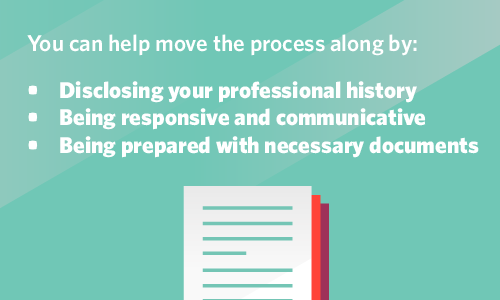
Disclose your professional history
Missing or inaccurate information slows the process. So report any licensure sanctions, malpractice claims, or board inquiries fully and accurately. Applications should also align with your CV: Even minor discrepancies, such as a two-month gap in your work history, must be reviewed and resolved.
Transparency matters more than perfection. Malpractice claims, DUIs, or board inquiries don’t automatically disqualify you, but undisclosed issues cause delays. Full disclosure keeps the process on track, even when it feels uncomfortable.
Be responsive
Ensure timely communications with the credentialing and licensing teams. Let them know the best and fastest way to reach you in case questions come up. “When providers respond to emails, keep us updated on timelines, and notify references to expect outreach, the process goes much smoother,” says Jazmin Renteria, MSS coordinator at Weatherby Healthcare.
Be prepared
Reading instructions carefully and submitting complete documentation early can reduce follow-ups. Even so, you may encounter a few bumps or need to resubmit items you’ve already provided.
If you’re new to the profession or new to locums, this repetition may feel unfamiliar. But it’s common.
Credentialing lasts for only a limited time and must be renewed.
Documents expire.
Weatherby must independently verify information for compliance and liability reasons.
Weatherby is your locums partner
Weatherby manages complexity so you can focus on patient care, not paperwork. It’s faster and less stressful than doing it alone. “We genuinely want to get providers to work successfully and on time,” says Debby Dedomenico, senior licensing approver at Weatherby Healthcare. While it may seem overwhelming at first, the process will get easier the more you do it.
To learn more about working locum tenens, view today's job opportunities below or give us a call at 954.343.3050.
Recommended Articles
Categories

Thank you,
We appreciate you contacting us. A consultant will be reaching out to you shortly to discuss this job opportunity. You can also get in touch with us directly by calling 954.618.5296.