
How to get licensed in a new state as a locum tenens physician
September 20, 2026
One of the biggest questions physicians have when considering locum tenens is whether getting licensed in another state is worth the hassle. It's a fair concern, and for many, obtaining a state medical license for locum tenens feels like the biggest logistical hurdle to accepting that first assignment.
The good news is that the process is more straightforward than many physicians expect. Between better planning, streamlined application processes, and options like the Interstate Medical Licensure Compact (IMLC) for eligible physicians, there are faster paths than ever. Here are a few practical tips for getting licensed in a new state to help make the process less intimidating.
1. Select the correct pathway to licensure
Before you apply, it's worth understanding the locum tenens licensing requirements that apply to your situation and determining which licensing pathway is right for you. Today, physicians have two primary options: applying directly through an individual state medical board or using the IMLC.
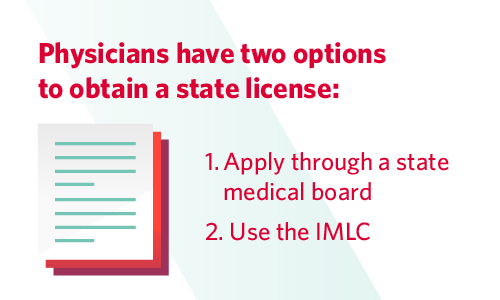
The traditional route requires submitting a separate application to each state where you plan to practice. This is the best option if you're applying in a non-IMLC state or don't meet the Compact's eligibility requirements.
For eligible physicians, the IMLC offers a faster, streamlined alternative. The Compact includes most U.S. states, plus Washington, D.C., and Guam. It uses an expedited pathway that begins with verifying your State of Principal License (SPL), or the state where you primarily practice. Once your SPL confirms your eligibility, you can obtain licenses in other participating states more efficiently.
Not every physician qualifies. Eligibility includes holding a full, unrestricted license in your SPL, meeting residency or practice criteria, maintaining specialty certification, and having a clean disciplinary history.
Taking a few minutes to choose the right pathway can simplify the licensing process in a new state and shorten your overall locum tenens state licensing timeline.
What you need to know: All about the Interstate Medical Licensure Compact
2. Start your licensing application early
As soon as an assignment becomes available that you can commit to—either presently or at some point in the future—notify the locums company and get started on obtaining a license. Some states may take a month to process a new license, while others may take over a year.
Further, licensing procedures vary widely from state to state, and sometimes supplemental certifications or credentials are required before approval or even before applying for a state medical license.
Texas, for instance, requires you to pass a jurisprudence exam, which you need to budget time for; it is a medical-legal exam you must prepare for and then take a formal, standardized test. Florida requires electronic fingerprinting through an approved vendor as part of its background check process, while states such as New York have mandatory training requirements on topics including infection control and child abuse identification that must be completed before licensure. None of these requirements is particularly difficult, but they all require advance planning and can add time if you're caught by surprise.
Another step that's easy to overlook is your DEA registration. If your assignment requires prescribing controlled substances, you'll likely need to update your DEA registration or obtain state-specific DEA authority, depending on the state's requirements. Because this process can take additional time, it’s best to start it alongside your licensing application rather than waiting until your license is approved. Handling both in parallel can help prevent unnecessary delays before your assignment begins.
3. Communicate well and often
When applying for a new state license, good communication can make all the difference. While some state medical boards have highly efficient licensing departments, others may request additional documentation, have longer review times, or communicate primarily by mail. Staying engaged throughout the process helps keep your application moving.
Even if you're working with a locum company, check in periodically on the status of your application. In many cases, the medical board will only discuss certain aspects of your application directly with you. Be sure your contact information is up to date so you don't miss a deficiency notice or a request for additional documentation that could delay the processing of your medical license. The last thing you want is not to receive requests for documents, your licensing materials, or your eventual license because your address or phone number wasn’t updated. Good communication prevents these avoidable issues.

If you're working with Weatherby, take advantage of their dedicated licensing team. They understand each state's unique requirements, know what documentation medical boards require, and help keep applications on track by monitoring deadlines and following up as needed. Their job is to connect all the dots so you can stay focused on preparing for your assignment. While they can't control how quickly a medical board processes an application, they can help you avoid preventable delays and make getting licensed in a new state much more manageable.
Get the details: 8 things to know about locum tenens credentialing
4. You don’t have to use every license you obtain
It is worth knowing that just because you are getting licensed does not mean you are locked into an assignment. In fact, when you are applying for a license for a new assignment in a state where you have never worked before, it’s not uncommon for that assignment to already be filled by the time you get the license. This is an important consideration when taking time off from your primary practice, and it may not always be explicitly explained to you.
5. Decide which licenses are worth obtaining
You can imagine how quickly you might accumulate state medical licenses as you accept locum assignments. However, be sure to give serious thought to which states you ultimately want to work in. You may receive offers for assignments across the country, and while the locums company will typically coordinate and pay for licensing, pursuing a license in a state where you have no intention of practicing may not be the best use of your time and effort.
Additionally, every license you obtain—and every hospital where you are credentialed—must typically be reported on future licensing and credentialing applications, whether those licenses are active or inactive. Over time, renewals, continuing education requirements, and the administrative burden of maintaining multiple licenses can add up, so it's worth being strategic about where you apply.

That being said, when you're just starting out, it's often better to bite the bullet and get licensed ahead of time—especially in states with consistently high demand for locum tenens physicians. You can always choose not to renew a license later if the travel, location, or practice opportunities aren't the right fit. Having an active license in hand can make the difference between landing a sought-after assignment and watching it go to another physician.
Getting a new license is achievable
Getting licensed in a new state may seem daunting at first, but it's much more manageable once you understand the process and plan ahead. Today, physicians have more options than ever—including the IMLC, for those who qualify—and having the right support can make a real difference. If you're working with Weatherby, their licensing team can help you navigate each state's requirements, so you can spend less time on paperwork and more time focusing on patient care.
Are you interested in learning more about locum tenens as a career alternative? Give us a call at 954-343-3050 or view today’s locum tenens job opportunities.
More on obtaining a medical license:
Recommended Articles
Categories

Thank you,
We appreciate you contacting us. A consultant will be reaching out to you shortly to discuss this job opportunity. You can also get in touch with us directly by calling 954.618.5296.